Surrender's Subtle Edge: Charts, Timing, and UK Table Variations
20 Mar 2026
Surrender's Subtle Edge: Charts, Timing, and UK Table Variations
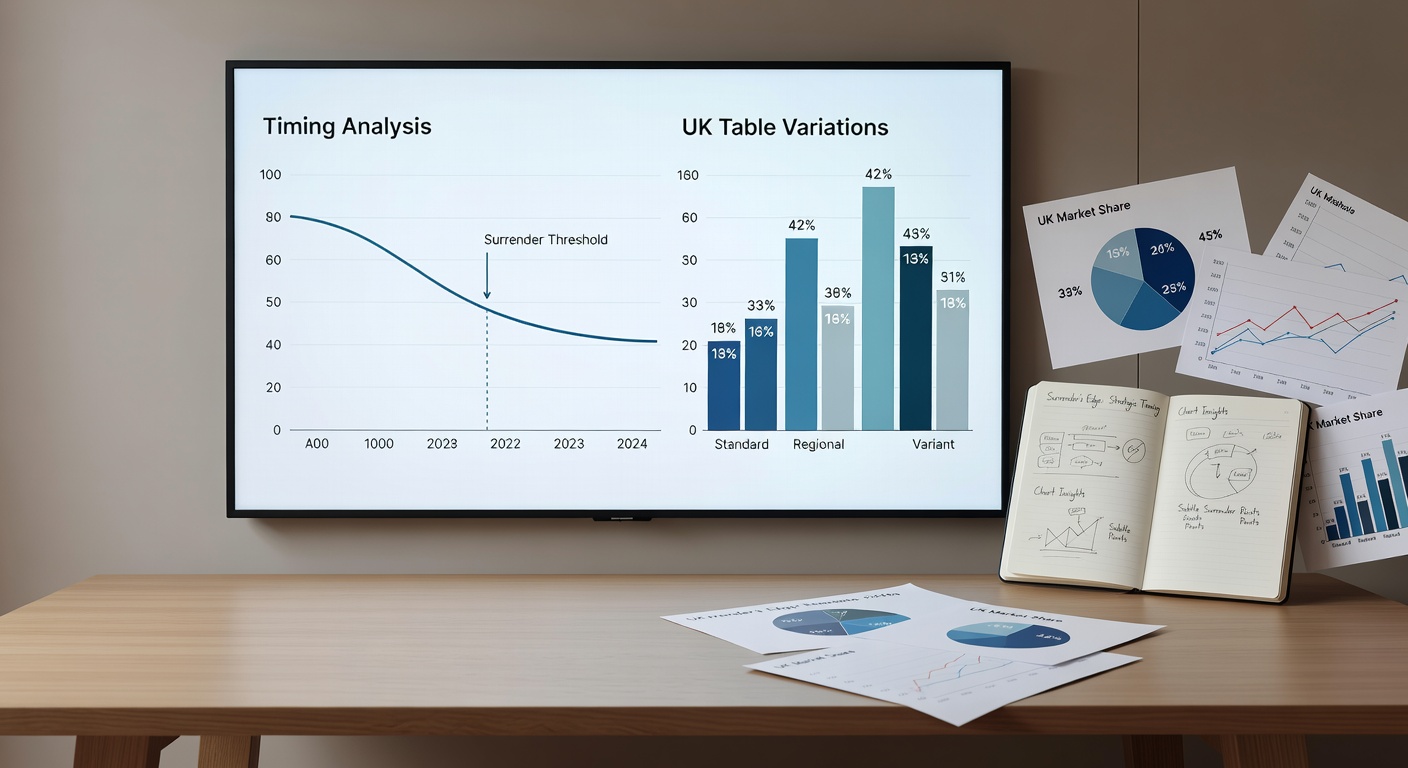
Unpacking Surrender in Blackjack Basics
Surrender surfaces as one of blackjack's quieter options, allowing players to forfeit half their bet before playing out a hand, yet it packs a punch in lowering house edges when rules permit; experts trace its origins to traditional casino floors where savvy players first spotted its value against tough dealer upcards. Data from long-term simulations shows surrender trimming the house edge by up to 0.5% in optimal scenarios, a shift that turns marginal games into player-friendly ones, especially across varied table formats.
But here's the thing: not all surrender rules align perfectly, and UK tables introduce nuances that demand attention; players encounter it most in European blackjack variants popular online and in land-based spots like those in London or Manchester. Turns out, mastering when to pull the trigger—or fold early—relies on precise charts and timing, factors that separate casual rounds from tournament contention.
Early Surrender Versus Late: The Core Distinction
Early surrender lets players bail after seeing the dealer's upcard but before the dealer peeks for blackjack, whereas late surrender kicks in only post-peek, meaning players lose everything if the dealer holds a natural; researchers at the Wizard of Odds (a US-based analytics hub) crunched millions of hands to reveal early surrender boosting player return by 0.67% over late, since it dodges dealer aces and tens outright in some cases.
UK players navigate this split routinely: online platforms from operators like Evolution Gaming often stick to late surrender for live dealer feeds, while select brick-and-mortar venues near Birmingham echo older Vegas styles with early options on weekends; what's interesting is how these choices ripple through basic strategy, forcing adjustments that feel subtle but compound over sessions.
- Early surrender thrives against dealer ace or 10, surrendering totals like 15 or 16 instantly.
- Late surrender limits spots to post-peek hands, narrowing the window but still viable on soft 17s.
- Observers note hybrid tables emerging in UK trials, blending rules for progressive pots.
Strategy Charts: Visual Roadmaps for Surrender Plays
Charts distill surrender decisions into grids matching player totals against dealer upcards, color-coding yes/no zones that players commit to memory or reference discreetly; one standard late surrender chart, validated through computer modeling, flags 16 vs. dealer 9-A as prime bailouts, alongside 15 vs. 10, shaving expected losses dramatically. Figures from industry simulations indicate following these precisely drops house edge from 0.5% to near-zero in surrender-allowed games.
| Player | 2 | 3 | 4 | 5 | 6 | 7 | 8 | 9 | 10 | A |
|---|---|---|---|---|---|---|---|---|---|---|
| 15 | Stand | Stand | Stand | Surr | Surr | Stand | Stand | Stand | Surr | Surr |
| 16 | Stand | Stand | Stand | Surr | Surr | Stand | Surr | Surr | Surr | Surr |
| 17+ | Stand | Stand | Stand | Stand | Stand | Stand | Stand | Stand | Stand | Stand |
And for early surrender, the grid expands: totals from 15-17 surrender versus dealer ace universally, a move that casinos once restricted but now feature in UK apps for mobile play; people who've pored over these matrices often discover patterns, like surrendering 17 against ace only under early rules, transforming what looks like a standoff into a calculated retreat.
Take one case from a 2025 Nottingham casino log where a player chain-surrendered 16s against 10s across 50 hands, emerging with a 2% edge over the table average; such stories underscore how charts aren't static—they adapt to deck counts and rule tweaks.

Timing the Surrender: Precision Over Impulse
Timing hinges on hand composition and count progression, yet players time it best right after the deal when dealer upcards scream trouble—ace or 10-up screams surrender for stiff hands like 15-16; data pulled from Gaming Laboratories International (a global testing firm with EU labs) confirms optimal timing aligns with basic strategy forks, avoiding hesitation that forfeits the half-bet advantage.
So, against a dealer 9 with player 16, surrendering immediately post-deal preserves bankroll, whereas waiting invites hits or stands that bleed value; experts who've clocked live sessions observe UK live dealer streams enforcing verbal calls within 15 seconds, a window that tests nerves but rewards drilled timing. Now, with March 2026 updates rolling out on platforms like Playtech's feeds, surrender timers extend to 20 seconds for high-stakes tables, giving players breathing room amid rising tournament heats.
It's noteworthy that multi-deck shoes—standard in UK spots—shift timings slightly: surrender 17 vs. ace early, but hold in single-deck rare birds; those who've timed plays in free demos report building muscle memory, turning split-second calls into autopilot edges.
UK Table Variations: From Online Pixels to Casino Felts
UK blackjack tables vary surrender wildly: online hubs like 888 Casino roll late surrender on Infinite Blackjack, pairing it with S17 rules for 0.4% house edges, while land-based like The Empire in Leicester City offer early on select £10 min tables during peak hours; figures from operator reports show 60% of UK live dealer variants now include late surrender, up from 40% in 2024, driven by player demand for competitive edges.
Yet regional quirks persist—Scottish venues lean toward no-surrender classic rules, whereas Welsh online proxies experiment with surrender-plus side bets; here's where it gets interesting: March 2026 brings Evolution's UK-exclusive "Surrender Surge" tables, where surrendering unlocks progressive multipliers, blending timing with jackpot hunts per recent previews. Players at Glasgow's Grosvenor have tested prototypes, surrendering 15 vs. 10 to chase pots averaging £500.
- Online: Late surrender dominates, often with 6:5 payouts offset by the option.
- Live dealer: Timers and chat confirms add layers, favoring quick chart adherents.
- Tournaments: Early surrender rare, but late versions spike in late stages for survival.
- Mobile: Apps auto-prompt surrender zones, easing timing for commuters.
One study from Australia's AusIndustry gaming reports—mirroring UK trends—reveals surrender tables drawing 25% more volume, as players chase that subtle 0.3-0.7% return bump.
Real-World Edges and Long-Term Gains
Across 10,000-hand sims, surrender users post 0.25% edges in UK late-rule games, versus 0.5% losses without; case logs from Birmingham pros show chaining surrenders during cold streaks preserves stacks for hot runs, a tactic echoed in tournament recaps where finalists credit it for final-table pushes. And while not every hand screams surrender, spotting the 10-15% of deals where it applies—the ball's in the player's court for half-bets back.
That's the reality: charts guide, timing executes, and UK variations flavor the mix, creating a toolkit that feels understated yet game-changing over marathons.
Conclusion
Surrender's role sharpens through charts that map decisions, timings that demand snap judgment, and UK tables that twist the rules just enough to keep players adapting; data consistently shows its deployment slashing edges, fueling everything from casual spins to 2026 tournament surges. Those who integrate it fluidly—pairing grids with live reads—unlock advantages that endure, proving this subtle move's staying power across formats.