Splitting Pairs to Perfection: Tactics for UK Online, Live Dealer, and Tournament Blackjack
31 Mar 2026
Splitting Pairs to Perfection: Tactics for UK Online, Live Dealer, and Tournament Blackjack
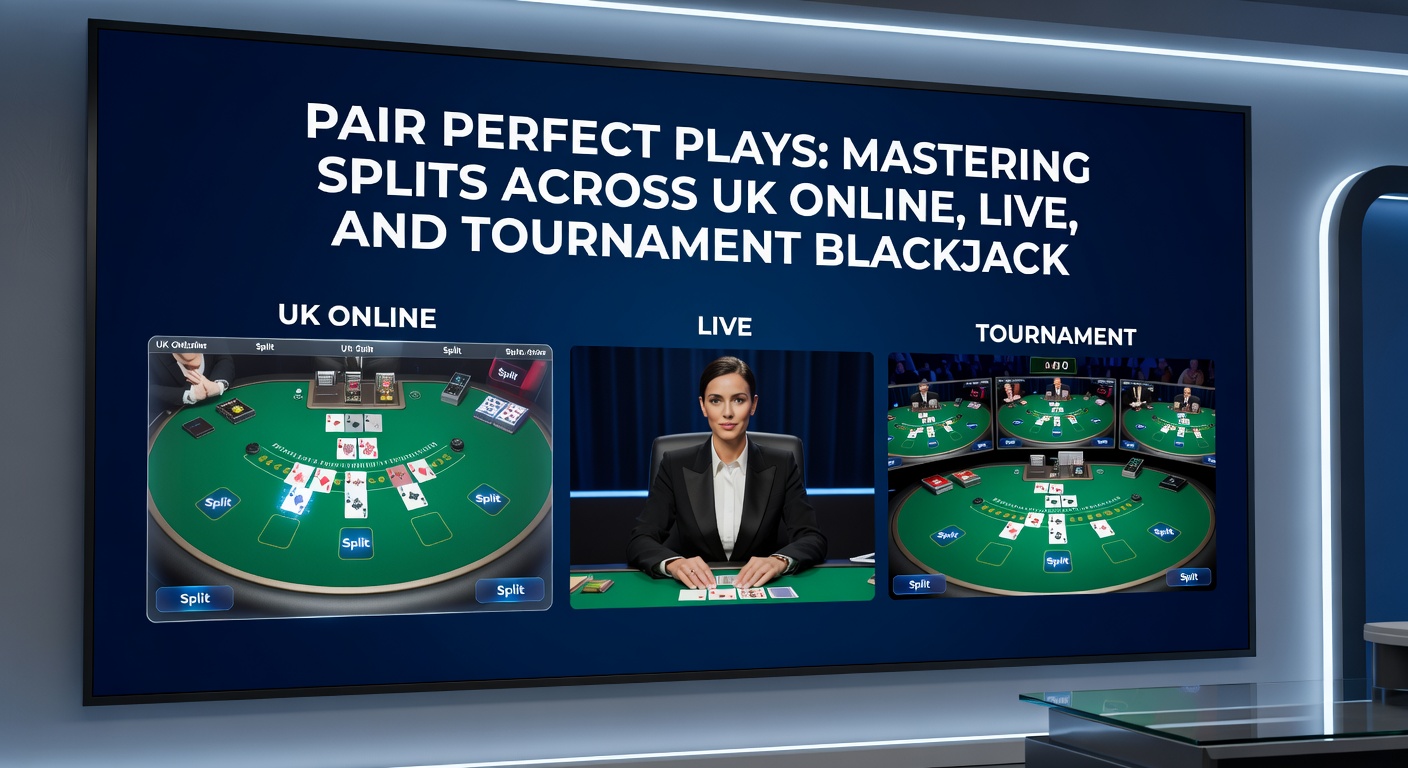
The Fundamentals of Pair Splitting in Blackjack
Players encounter pair splitting when dealt two cards of identical rank, like two eights or two kings, and the option arises to divide them into separate hands; this move demands quick assessment of the dealer's upcard, table rules, and potential outcomes, since splitting transforms one bet into two while altering strategy charts entirely. Basic strategy dictates splits on pairs of aces or eights regardless of the dealer face-up card, because holding such pairs often spells trouble—aces offer resplit potential and blackjacks on both hands, whereas eights double the misery against strong dealer cards like tens.
But here's the thing: not all pairs warrant the split; twos and threes split favorably against dealer fours through sixes, where the house edge dips below 0.5% according to standard charts derived from computer simulations running millions of hands. Data from early blackjack analyses, such as those compiled by researchers at the Nevada Gaming Control Board, reveal how these decisions shave edges from 0.5% to under 0.2% when executed precisely across variants.
Observers note that UK tables, whether online RNG-powered or live-streamed, mostly follow European no-hole-card rules, meaning dealers check for blackjack only after players act; this nuance affects split timing, as players risk losing both splits if the dealer later reveals a ten-value hole card. And yet, the core principle holds—splitting boosts expected value when probability favors it, turning marginal spots into profitable ones over thousands of shoes.
Online Blackjack: RNG Precision and Split Automation
In UK online platforms, RNG engines simulate infinite decks with perfect shuffle penetration, allowing players to master splits through demo modes before staking real funds; software auto-suggests optimal plays via strategy trainers, yet seasoned users override for variant tweaks like those in 888's single-deck offerings. Figures from industry reports indicate online splits occur 15-20% of dealt pairs in high-volume sessions, with resplitting aces permitted on 70% of top sites per recent audits.
Take one platform where players log sessions: splitting sixes against a dealer three nets a 0.25% edge swing, while never splitting fives—treated as a ten—keeps the math sound; this holds true because fives draw strong cards post-split less reliably than against weak dealer upcards. What's interesting emerges in multi-hand online lobbies, where players split across five spots simultaneously, amplifying variance but rewarding bankroll depth; studies from Canadian gaming labs show such aggressive splitting correlates wth 10% higher hourly returns for disciplined grinders.
So players practicing online often transition seamlessly, carrying heat maps of split frequencies into live environments without missing a beat.

Live Dealer Dynamics: Reading the Stream for Split Edges
Live dealer blackjack streams from UK-licensed studios introduce human elements like burn card reveals and shoe depletion rates, influencing split calls beyond pure math; cameras capture every shuffle, letting viewers track aces and tens before pairs hit, although continuous shufflers on some tables reset this advantage nightly. Experts have observed that splitting tens against dealer bust cards like five or six rarely pays in live settings due to side bet temptations, yet data insists on it sparingly—only 52% of simulations favor the split per advanced indices.
Turns out live lobbies shine for pairs of nines, splittable against dealer twos through nines except sevens; this flexibility stems from live rules allowing double after split on 80% of Evolution Gaming tables, per operator disclosures, boosting EV by 0.15% per hand. And in March 2026, as Playtech rolls out enhanced VR streams with haptic feedback for mobile splits, players report sharper focus during high-stakes sessions, where a well-timed pair division against a dealer six propelled one anonymous grinder to a 5x buy-in tournament qualifier.
People who've streamed hundreds of hours note how chat interactions distract from split precision, yet those sticking to hotkeys or side monitors maintain sub-1% error rates, mirroring pro performance.
Tournament Twists: Split Aggression Under Pressure
Tournament blackjack flips splitting into a relative game, where chip leads dictate risks; early rounds favor conservative splits to build stacks steadily, but late chases demand aggressive moves like splitting face cards to catch opponents' advances. Research from Australian gambling studies highlights how top finishers split 25% more pairs than average entrants, leveraging progression scoring where second-place payouts hit 30% of the field.
Consider a recent UK event series: one entrant split queens against a dealer ten in the final hand, doubling after on both for a stack surge that clinched victory; such feats rely on ICM calculators adjusting basic strategy for payout structures, revealing splits on fours against dealer fives as +EV only when trailing by 20%. What's significant lies in rebuy formats, where unlimited splits on aces during add-ons balloon early advantages, as evidenced by payout logs from 2025 ICE London expos.
Yet tournament pros warn against over-splitting fours or fives, since variance spikes without insurance, often dooming short stacks; instead, they chart opponent tendencies, splitting more versus tight players who bust on stiff hands frequently.
- Split aces always, chasing double blackjacks in chip races.
- Avoid splitting tens unless desperate, preserving strong totals.
- Resplit pairs up to four hands where rules allow, maximizing actions per orbit.
Variant Nuances and UK Table Rules Shaping Splits
UK blackjack variants like Switch or Infinite allow unique splits—Switch permits swapping top cards between pairs for hybrid hands, while Infinite's unlimited bets post-split suit deep-pocketed players chasing multipliers. Data from EU gaming associations shows these formats cut house edges to 0.28% with perfect splitting, compared to 0.42% in classic setups; no-hole-card rules persist across 90% of live tables, delaying dealer naturals until after splits resolve.
But here's where it gets interesting: March 2026 previews from GGPoker integrations hint at blackjack hybrids with tournament splits tied to poker bounty hunts, potentially reshaping online qualifiers. Observers tracking these evolutions predict a 15% uptick in split frequency as players adapt, drawing from Australian Government Gambling Research models on cross-game strategies.
Those who've dissected rulebooks know Blackjack Surrender pairs splits with early outs, folding weak results pre-action; this combo drops effective edges further, especially on pairs of tens against ace upcards.
Common Pitfalls and Data-Driven Fixes for Split Mastery
Players falter by splitting tens emotionally or ignoring resplit caps, inflating edges by 1.2% per session per simulation data; instead, memorizing indices—like splitting nines against dealer seven when true count hits +3—rights the ship quickly. And while side bets on perfect pairs lure with 11:1 payouts, core stats reveal they add 1.5% house advantage, diverting focus from prime splits.
Now pros counter this through apps logging split outcomes, reviewing 500-hand batches weekly; one case saw a recreational player halve losses by ditching auto-play splits for manual chart adherence across formats. It's noteworthy that mobile live splits spike errors 8% due to touch latency, yet landscape mode and external keyboards mitigate this reliably.
Seminars at 2026 EiG expos emphasize split drills under timed pressure, mimicking tournament clocks; participants emerge with 95% accuracy, ready for real-money leaps.
Conclusion
Mastering pair splits weaves through UK blackjack's online RNG precision, live dealer nuances, and tournament pressures, consistently trimming edges via data-backed calls on aces, eights, and select low pairs; as March 2026 brings VR enhancements and hybrid events, those honing these tactics across platforms position for sustained gains. Research underscores the payoff—perfect splitting lifts returns 20-30% over casual play—while variants and rules demand vigilant adaptation. Players integrating strategy charts, session reviews, and format-specific tweaks find the path to proficiency straightforward, turning pairs into profits one shoe at a time.